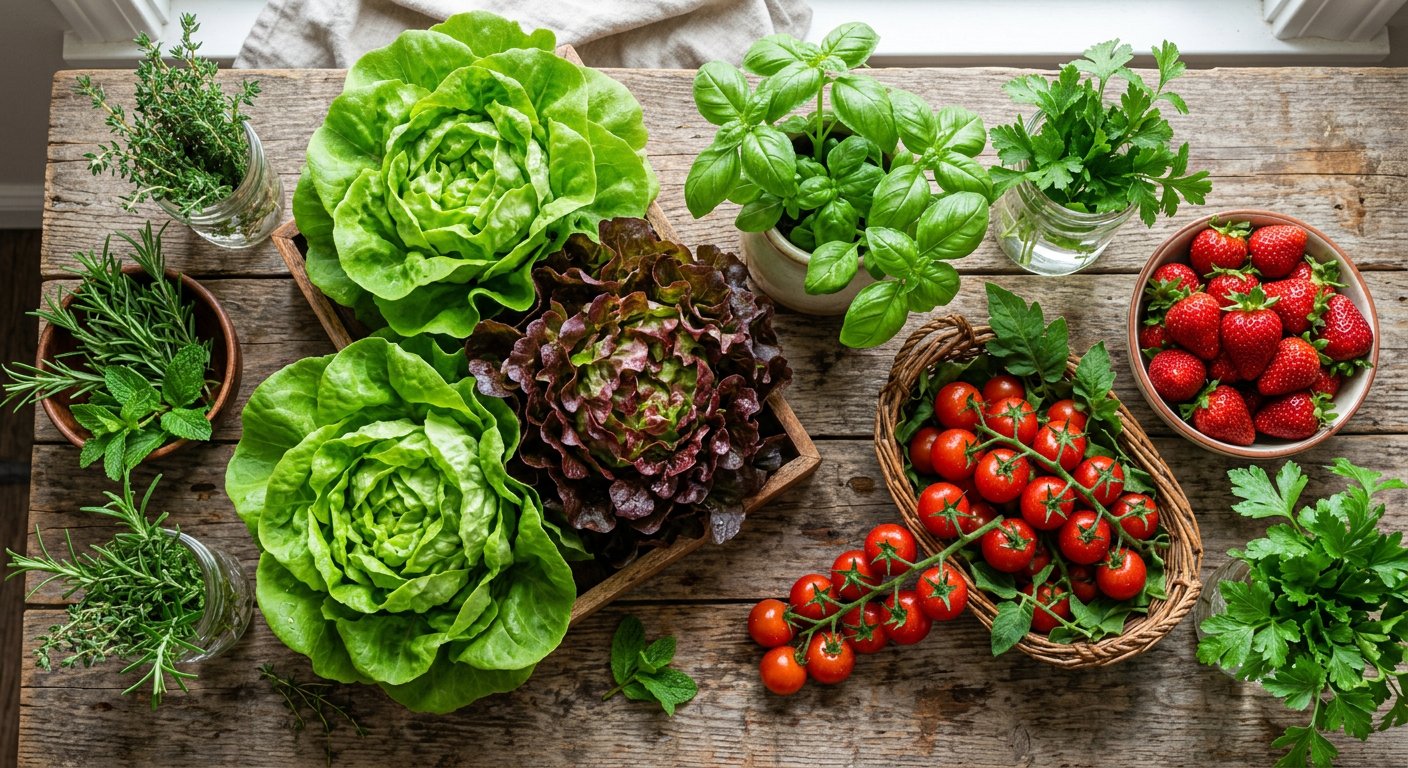
Not every plant thrives equally in hydroponics. While you can technically grow almost anything without soil, some plants are absolute superstars — producing faster, yielding more, and requiring less maintenance than their soil-grown counterparts.
After years of testing dozens of crops in various hydroponic systems, we've narrowed it down to the seven plants that consistently deliver the best results. Whether you're a beginner or a seasoned grower looking to optimize your setup, these are your best bets.
1. Lettuce — The Hydroponic King
If you could only grow one thing hydroponically, make it lettuce. It's fast, forgiving, and produces an incredible amount of food from a small system.
- Time to harvest: 3–5 weeks from transplant
- Best system: DWC, NFT, or any system really
- pH range: 5.5–6.5
- EC range: 0.8–1.2 mS/cm
- Light needs: 12–14 hours/day
The "cut and come again" method works beautifully — harvest outer leaves and the plant continues producing for weeks. Butterhead, romaine, and loose-leaf varieties all perform exceptionally well. Our top picks: 'Buttercrunch', 'Red Sails', and 'Black Seeded Simpson'.
2. Basil — The Herb That Loves Water
Basil absolutely thrives in hydroponic systems. In fact, hydroponic basil often grows 2–3× faster than soil-grown basil and produces more aromatic, flavourful leaves.
- Time to harvest: 4–6 weeks from seed
- Best system: DWC, NFT, or Kratky
- pH range: 5.5–6.5
- EC range: 1.0–1.6 mS/cm
- Light needs: 14–16 hours/day
The key to prolific basil is regular harvesting. Pinch off the top sets of leaves frequently to encourage bushier growth, and always pinch off flower buds — once basil flowers, leaf production slows dramatically.
3. Tomatoes — The Rewarding Challenge
Tomatoes are one of the most rewarding crops to grow hydroponically. You'll get bigger harvests, earlier fruiting, and often better-tasting fruit than from soil.
- Time to harvest: 8–12 weeks from transplant
- Best system: DWC (large reservoir), Dutch bucket, or drip
- pH range: 5.5–6.5
- EC range: 2.0–3.5 mS/cm (higher than most crops)
- Light needs: 14–18 hours/day
Tomatoes are heavier feeders and need more space, support (trellis or stakes), and stronger nutrient concentrations. Cherry tomatoes are the easiest to start with — they're prolific and forgiving. For larger varieties, try 'Beefsteak' or 'Roma'.
4. Strawberries — Sweet Hydroponic Gold
Hydroponic strawberries are a game-changer. You get fruit year-round, and the flavour is often superior because you can precisely control the nutrient profile to maximise sweetness.
- Time to harvest: 4–6 weeks after flowering (from established runners)
- Best system: NFT, vertical towers, or Dutch buckets
- pH range: 5.5–6.5
- EC range: 1.0–1.5 mS/cm
- Light needs: 12–16 hours/day
Start with bare-root crowns or runners rather than seeds — they'll fruit much faster. Day-neutral varieties like 'Albion' and 'Seascape' produce fruit continuously regardless of day length, making them ideal for indoor growing.
5. Peppers — Colourful and Productive
Bell peppers, jalapeños, and chilli peppers all grow beautifully in hydroponics. They're relatively low-maintenance once established and produce abundantly.
- Time to harvest: 10–14 weeks from transplant
- Best system: DWC, Dutch bucket, or drip
- pH range: 5.5–6.5
- EC range: 1.8–2.5 mS/cm
- Light needs: 14–18 hours/day
Peppers like it warm (22–28°C) and benefit from hand pollination indoors — a gentle shake of the plants when flowers appear is usually sufficient. Hot peppers tend to be even more productive than sweet peppers in hydroponic systems.
6. Cucumbers — Vigorous Climbers
Hydroponic cucumbers are remarkably productive. A single healthy plant can produce 20+ cucumbers over its growing season, and they grow significantly faster than in soil.
- Time to harvest: 6–8 weeks from transplant
- Best system: Dutch bucket or large DWC
- pH range: 5.5–6.0
- EC range: 1.7–2.5 mS/cm
- Light needs: 14–16 hours/day
Cucumbers are vigorous climbers that need vertical support. Choose bush or compact varieties for smaller spaces. 'Marketmore 76' and 'Diva' are excellent hydroponic performers. Harvest frequently to keep production high.
7. Microgreens — Fast, Nutritious, and Profitable
Microgreens are the fastest crop you can grow hydroponically — ready to harvest in just 7–14 days. They're packed with nutrients (up to 40× more concentrated than mature plants) and have excellent market value.
- Time to harvest: 7–14 days
- Best system: Shallow trays with ebb & flow, or simple wicking mats
- pH range: 5.5–6.5
- EC range: 0.5–1.0 mS/cm (very light feeding)
- Light needs: 12–16 hours/day
Popular microgreen varieties include sunflower shoots, pea tendrils, radish, broccoli, and beet. They require minimal space — you can stack trays vertically under LED lights for maximum production per square foot.
Quick Comparison Table
Easiest: Lettuce, Basil, Microgreens
Most rewarding: Tomatoes, Strawberries
Fastest turnaround: Microgreens (7–14 days), Lettuce (3–5 weeks)
Best for small spaces: Herbs, Microgreens, Lettuce
Best for beginners: Lettuce → Basil → Microgreens → then branch out!
What to Avoid as a Beginner
While most plants can be grown hydroponically, some are significantly harder and not worth the frustration when you're starting out:
- Root vegetables (carrots, potatoes) — They need specific media and are slow-growing. Possible but tricky.
- Corn — Too tall, wind-pollinated, and space-inefficient.
- Large melons (watermelons) — Enormous space requirements and heavy fruit needs support.
- Perennial trees/shrubs — Not practical in most hydroponic setups.
"Start with lettuce and basil. Once you've had success with those, you'll have the confidence and understanding to tackle anything. The learning curve is the same for every plant — just the patience required varies."
No matter which plants you choose, remember that consistency is key. Stable pH, regular nutrient changes, and adequate lighting will get you 90% of the way to amazing harvests. Happy growing! 🌿